
 KAN (Here)
Present
Integrative
Force
KAN provides rapid, professional, and readily available therapeutic support during national emergencies. Our teams operate in real time, under complex field conditions, delivering immediate, first-response interventions, integrated with complementary medicine grounded in dedicated training, alongside clinical experience and clear operational protocols—while maintaining the highest standards of safety, professionalism, and clinical precision.
Full Integration with Complementary Medicine
KAN operates as an integral part of Israel’s multidisciplinary emergency response system, in close coordination with healthcare services, mental health systems, welfare agencies, local authorities, and emergency responders.
This is a complementary, coordinated, and transparent response — not parallel activity, but full integration within existing national systems.
Immediate and Professional Response
Rapid deployment-ready teams
Full integration
working shoulder to shoulder with medical teams
Supervision and oversight
structured protocols grounded in research and field experience
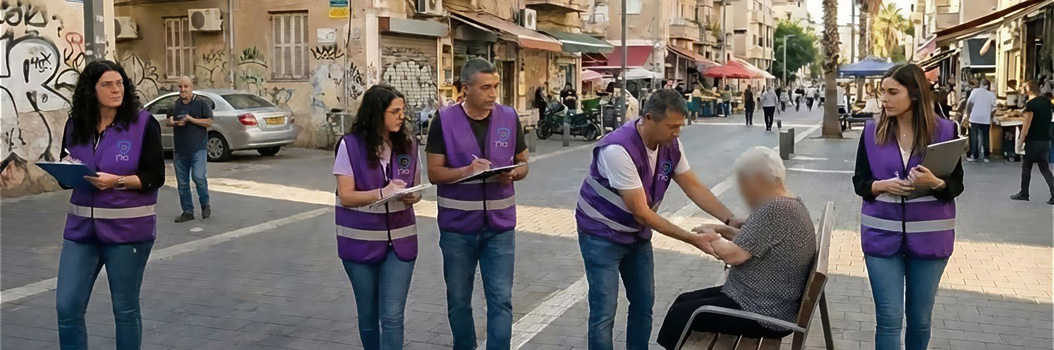
Brief, Focused, Regulating Intervention
KAN’s intervention is defined as a short, time-limited emergency response, aimed at regulating arousal, calming acute distress, and reducing immediate suffering.
This is not in-depth or process-oriented therapy, but initial stabilization that helps prevent deterioration and creates conditions for continued care or rehabilitation.

Tools
KAN teams use simple, effective, and field-adapted therapeutic tools, including: Conscious breathing, Gentle, consent-based touch. Acupuncture, Grounding techniques, Energy-based tools, Basic emotional mediation.
Tools are selected according to the individual’s condition, context, time constraints, and cultural sensitivity.

Approach
KAN operates through an integrative, trauma-informed approach, grounded in ethics, clear professional boundaries, and informed consent.
The emphasis is on regulated human presence, respect for human dignity, cultural and gender sensitivity, and strict adherence to scope of training - avoiding any intervention beyond professional qualification.

Outcomes
- Reduction of acute distress
- Strengthening of safety and sense of control
- Improved physical and emotional regulation
- Support for personal and community recovery processes
- Accurate referral and connection to follow-up services within the system
Authority and Trust
KAN’s operation is based on structured training, systematic documentation, supervision, and clearly defined interfaces with partner systems. This foundation builds professional authority and trust - among individuals, communities, and national healthcare and emergency systems alike.
An Uncompromising Professional Standard
KAN operates under a clear and uniform standard: Rigorous eligibility criteria, Ongoing training and re-certification
A binding ethical code, Systematic documentation, Continuous monitoring and quality assurance.
Quality, responsibility, and transparency are the cornerstones of the model.
Steering Committee
Strategic–Professional Steering Committee. The Steering Committee serves as the leading strategic and professional body guiding KAN. It is responsible for policy setting, approval of emergency activation, oversight of professional and ethical standards, and ensuring full coordination with national systems.
Prof. Elad Schiff
Chairperson, Israeli Society for Complementary, and Integrative Medicine; Director, Internal Medicine B, and the Integrative Medicine Service, Bnai Zion Medical Center
Dr. Gali Stoffman
Chief Medical Director, Maccabi Healthcare CIM Services - Maccabi Tivi, Director of CIM Service, Barzilai Medical Center
Prof. Mooli Lahad
senior medical psychologist Founder and President, Community Stress Prevention Centre (Mashabim)
Guy Tavori
MSW - Project Manager
Prof. Nurit Yirmiya
Full Professor, Department of Psychology, Hebrew University of Jerusalem, founder of the "Otef Lev" project.
Dr. Alon Reshef
Director of Psychiatry Division, HaEmek Medical Center
Gili Shenar
Lecturer and Researcher in Emergency and Disaster Management, Tel Aviv University
Ori Nir-Winter
Executive Director, Advot Fund
Hagai Dafna
Co-owner and Co-CEO, Tenufa Consultants
Dr. Meir Menahem
Co-owner and Co-CEO, Tenufa Consultants
Adi Schneider-Moreh
Chair, BeMeitavi the Ruth Vrobel Foundation
Daphna Dovev
CEO, BeMeitavi the Ruth Vrobel Foundation
Building the Emergency Response System of Tomorrow
KAN is not an ad-hoc solution, but a sustained national infrastructure. The model is designed with a forward-looking perspective on complex, multi-arena, and prolonged crises, aiming to develop an integrative, flexible, and knowledge-based response system capable of consistent operation under future strain and changing conditions.

Operational Readiness in Routine Times
KAN maintains operational readiness even during periods of calm through: Periodic training, Protocol refreshment, Simulations and drills, Maintenance of a qualified practitioner pool , Documentation and oversight mechanisms.
This ensures high preparedness, immediate availability, and effective response at all times.

Dedicated Training
All KAN practitioners undergo specialized emergency training, including: Brief, regulating interventions, Trauma-informed care, Ethics and professional, boundaries in the field, Multidisciplinary teamwork, Documentation and reporting, Simulations and extreme-scenario drills.
Completion of this training is a prerequisite for active participation in the framework.

Research and Evaluation
KAN’s operation is accompanied by a systematic research and evaluation framework, examining: Intervention effectiveness, Experiences of individuals and practitioners, Regulation outcomes and reduction of distress.
Findings are used for continuous improvement, professional knowledge-building, and evidence-based demonstration of impact for decision-makers.

National Pilot
The first phase includes a controlled national pilot, implemented across a broad geographic spread.
The pilot will test the model under real-life conditions, enable operational adjustments, refine protocols, evaluate interfaces with field partners, and generate insights - paving the way for large-scale implementation as a permanent national model.


